Wood wall paneling has become a popular choice for homeowners and designers who want to add warmth, texture, and character to contemporary interiors. Unlike traditional painted walls, wood panels can transform an ordinary surface into a statement feature while complementing modern furniture, lighting, and architectural details.
A lot of modern interiors lean on flat surfaces and neutral paint, which looks fine but can feel a bit empty after a while. Wood adds grain and shadow that a flat wall doesn’t have, and it does it without turning a room into a theme.
Below are five ways people are using wood panels in homes and businesses, along with some practical notes on choosing the right one.
Why is Wood Wall Paneling Popular in Modern Interiors
Wood looks natural and put-together at the same time, which not many materials manage. Stone can feel cold in the wrong setting. Wallpaper can feel busy. Paint alone can leave a room looking unfinished. Wood tends to sit well in almost any style — Scandinavian, industrial, luxury, minimalist.
It Helps Define Open-Plan Spaces
In open-plan homes, a wood panel wall can mark where a dining area ends and a living space begins, without an actual wall being there.
It Creates an Instant Focal Point
Put wood paneling behind a bed, a TV, or a reception desk, and that wall becomes the focal point on its own, without extra decor needed to fill it.
1. Make a Statement with 3D Wood Wall Panels
If you want people to actually notice a wall, not just glance past it, 3D wood panels are probably your move. Professional wall panel services in Dubai can install these with raised patterns, geometric shapes, or layered grooves built right in, so the wall has real depth to it.
Behind a sofa, a fireplace, or a television is where this tends to land best. Those are the walls people are already looking at anyway, so why not give them something to look at?
Lighting Makes the Difference
Because the surface isn’t flat, warm directional light casts shadows across the grooves and shapes, and that’s where most of the visual effect comes from. Without the right lighting, the texture barely reads.
Keep the Rest of the Room Simple
A wall like this already carries a lot of visual weight, so bold art or patterned furniture on top of it usually makes the space feel cluttered rather than finished.
2. Bring in Structure with Wood Strip Wall Panels
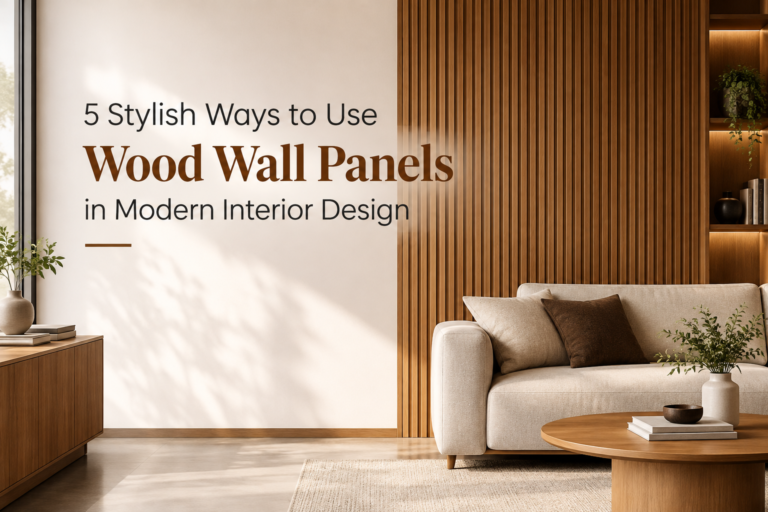
If 3D panels feel like too much, wood strips are the quieter alternative and honestly, they’re the one I’d recommend to most people. Thin wood slats, evenly spaced, running either vertically or horizontally across a wall. Simple, but it changes a room instantly.
Vertical strips are a neat trick if your ceilings are on the lower side. The eye follows the lines upward, so the room reads taller than it is. They look great behind a headboard, along a hallway, or as a backdrop to a wall-mounted TV. Especially with a thin strip of LED lighting tucked behind them.
They also mix well with other materials. Warm wood next to something cooler, concrete, stone, black metal — creates a nice bit of tension. That contrast is basically the backbone of a lot of modern industrial interiors you’ve probably admired without knowing why they worked.
3. Add Texture with Fluted Wood Panels
Fluted panels sit right in the middle more texture than a plain strip wall, less “look at me” than a 3D one. They’re made of continuous vertical grooves running down the panel, which gives a wall rhythm and depth without tipping into decorative overkill.
Common Places to Use Fluted Panels
- Behind a bed
- Around a TV wall
- Down a hallway
- Behind a reception desk
- On a dining room feature wall
- Wrapped around a column
That last one is a nice trick, actually because the groove pattern is continuous, you can carry it around a corner or a column and it still looks like one cohesive design, not a random patch of texture.
Tone matters a lot here. Light oak feels breezy and casual. Walnut or darker finishes push things toward something more expensive-looking, almost immediately.
4. Go Dramatic with Dark Wood Wall Paneling
This one’s not for everyone, but when it works, it really works. Deep walnut, espresso, near-black tones dark wood paneling gives a room a kind of gravity that lighter finishes just can’t.
The trick is balance. Left alone, dark walls can swallow a room and make it feel smaller or heavier than it is. So you counter that cream furniture, soft warm lighting, light flooring, natural textiles. It’s the contrast that makes it feel luxurious instead of gloomy.
This works especially well in:
- Bedrooms
- Home offices
- Dining rooms
- Media rooms
- Boutique-style hotel lobbies or reception areas
If your room is small, don’t panel all four walls in dark wood. Do one, maybe two, and let the rest of the space stay light. Otherwise you’ll end up with a room that feels more cramped than cozy.
5. Add Character With Reclaimed and Decorative Wood Panels
Not every wall needs to be perfectly uniform. Sometimes a space actually benefits from a bit of imperfection knots, color variation, visible grain that clearly came from somewhere. That’s the appeal of reclaimed wood panels. They look lived-in in a way you genuinely can’t fake with a flawless finish.
This style tends to shine when it’s paired against something sleek — a glass table, minimalist lighting, a modern sofa. The rustic-meets-modern combination is what keeps it from feeling like a cabin. You’ll see this a lot in restaurants, boutique shops, and offices trying to feel a little less corporate and a little more memorable.
Quick practical note: if you’re not ready for anything permanent, peel-and-stick wood panels are worth a look. They’re simple to put up, work well for renters or smaller accent projects, and don’t require the same commitment as a full install. Just check the moisture resistance and surface requirements first, not every wall is a good candidate.
How to Choose the Right Panel
Room Size
Large, bold textures can overwhelm small rooms. Strips or fluted panels tend to work better than heavy 3D designs in tighter spaces.
Light and Color
Bright rooms can handle darker wood tones. Dimmer rooms often look better with lighter finishes.
Room Use
A delicate finish suits a low-traffic bedroom. The same finish in a busy hallway or restaurant may not hold up as well.
Installation
3D and fluted panels often need professional installation. Peel-and-stick options are a lower-commitment alternative for smaller updates.
Conclusion
A wood accent wall is a relatively small change that can shift the feel of an entire room, whether that’s the depth of 3D panels, the order of wood strips, the texture of fluting, or the weight of a dark walnut finish.
Seeing samples in person before deciding is worth the extra step, since wood tone can look different under actual lighting compared to a photo. For larger projects, bringing in someone experienced early on can help avoid costly changes partway through.
Rare Home Decor offers a range of wood wall panel styles and finishes to help you find the right fit for your space.