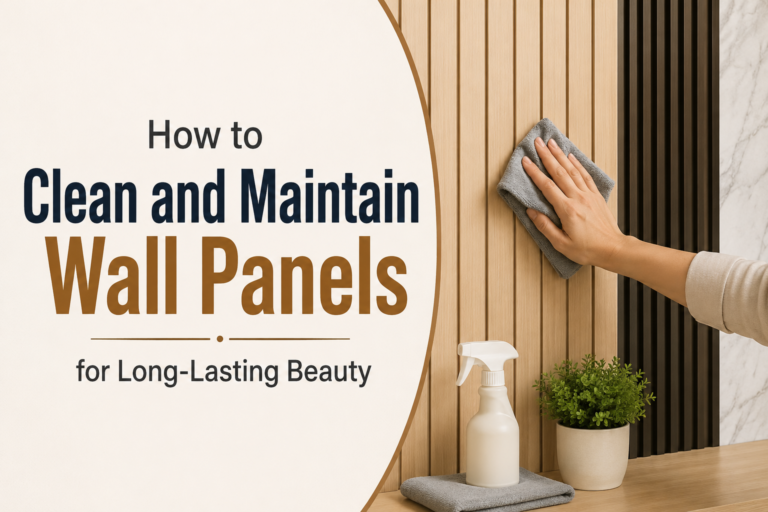
There’s something satisfying about a freshly installed wall panel — the texture catches the light, the color feels rich, and the whole room instantly looks more finished. The tricky part is keeping that look. Dust settles into grooves, fingerprints show up near light switches, and bathrooms or kitchens can leave panels dealing with grease and humidity they were never quite designed to handle on their own.
Wall panels can instantly make a room look more polished, modern, and luxurious. Whether you have affordable wall panels in Dubai or premium decorative designs, regular cleaning and proper care can help preserve their appearance for years. Dust, stains, moisture, and everyday marks can gradually affect the finish, but a simple maintenance routine can keep your panels looking fresh and attractive.
Why Bother Cleaning them Regularly?
Wall panels collect dust the same way any other surface in your home does. The difference is that decorative panels especially 3D or textured ones have a lot more surface area for dust to hide in. Ridges, grooves, and raised patterns all give it somewhere to sit.
In kitchens and bathrooms, you deal with more than just dust. Grease, soap residue, and humidity build up over time. If you leave them too long, they can create stubborn marks that become much harder to remove.
Regular cleaning does more than keep your wall panels looking good—it helps you catch small issues before they become bigger problems. Wipe the panels regularly to maintain an even finish and make deep cleaning much easier when needed. This routine becomes especially important in Dubai, where heat, dust, and strong sunlight can put extra strain on interior surfaces.
The Basics of Cleaning Wall Panels
Before you clean anything, take a second to figure out what your panels are actually made of. PVC, wood, MDF, and PU all behave differently, and a method that’s perfectly safe for one material could damage another.
Once you know what you’re working with, the process is pretty simple:
- Start dry — wipe off loose dust with a soft microfiber cloth or a soft-bristled brush.
- Mix a mild cleaning solution: lukewarm water with a small amount of gentle soap works for most panels.
- Dampen your cloth rather than soaking it. Panels don’t need to be drenched to get clean.
- Wipe in the direction of the texture or grain, using light pressure.
- Go over the surface again with a clean, slightly damp cloth to remove any leftover soap.
- Dry the panel fully before you consider yourself done.
One habit worth building: always test a new cleaning product on a small, hidden section first. It only takes a minute, and it can save you from an unpleasant surprise like fading or a damaged finish on a highly visible wall.
What Should You Actually Clean Them With?
There’s no single “best” cleaner it really comes down to the material. For most everyday cleaning, though, you genuinely don’t need anything stronger than diluted mild soap and water.
Skip the abrasive powders, stiff scrub brushes, and harsh chemical cleaners unless your panel manufacturer specifically says they’re safe to use. These can dull a finish or leave faint scratches that become more obvious as time goes on usually right around the point when you notice them under certain lighting and can’t unsee them.
For most day-to-day dirt and fingerprints, a microfiber cloth and a mild solution will do the job just fine.
Cleaning PVC Panels
PVC is one of the easier materials to maintain, mostly because of its smooth, moisture-resistant surface. A microfiber cloth handles dust easily, and for fingerprints or light grease, warm water with a touch of mild soap is usually all you need.
The one thing to be careful about is water pooling around joints, edges, or electrical fittings moisture that sneaks behind the panel is a different problem entirely. Wipe gently, then dry the surface so nothing lingers.
Cleaning Wood Panels Without Ruining the Finish
Wood panels ask for a slightly gentler touch. Natural wood and wood-look finishes don’t always respond well to moisture or the wrong cleaning product, so it pays to be a little more careful here.
Start dry, with a soft cloth to lift off surface dust. If something needs more than that, lightly dampen the cloth rather than saturating it, and wipe without pressing too hard.
The important part comes after cleaning: dry the wood promptly. Leftover moisture is what tends to cause swelling, staining, or a finish that starts to look tired before its time — particularly if the panel isn’t fully sealed. Skip anything abrasive, and steer clear of strong chemical cleaners that can strip the protective coating.
Cleaning 3D and Textured Panels
These take a bit longer simply because of how much surface area is involved. Dust doesn’t just sit on top, it gets into raised patterns, grooves, and recessed sections where a flat wipe won’t reach.
A microfiber cloth works fine for the broad, flat areas, but for the detailed sections, a small soft-bristled brush does a much better job of getting into the texture without forcing it. Go slowly rather than pressing hard.
If something stubborn won’t budge with dry cleaning, a small amount of mild solution on a cloth, applied carefully, usually does the trick. Avoid hard brushes or abrasive pads, especially on raised edges, because they can scratch the surface easily, and you may not be able to repair those scratches.
Dealing With Spills and Stains
Timing matters more than technique when it comes to stains. A spill wiped up right away is far easier to deal with than one that’s had time to dry and set into the surface.
For ordinary marks fingerprints, food splashes, general dirt a soft cloth and mild soapy water is your first move. Resist the urge to scrub hard just because a stain looks stubborn. More often than not, aggressive scrubbing does more damage to the panel than the stain itself would have caused on its own. If a mark won’t come out with gentle cleaning, check what the manufacturer recommends before reaching for something stronger.
Keeping Panels From Fading
Sunlight is one of those things people don’t think about until it’s too late. Consistent UV exposure gradually wears down certain colors, coatings, and finishes often in a way that’s uneven, so you end up with a visibly lighter patch where the sun hits directly.
Curtains, blinds, or UV-filtering window treatments help a lot in rooms that get strong direct light. It’s also worth occasionally rearranging furniture or decor pieces so the same section of wall isn’t shielded from light indefinitely while everything around it fades that kind of contrast tends to stand out more than gradual, even fading would.
Regular cleaning plays a role here too. A layer of dust can make panels look dull and uneven in a way that’s easy to mistake for fading, even when the color underneath is fine.
Avoiding Mold in Humid Rooms
Moisture control is the real key to keeping mold away, and it matters most in bathrooms, kitchens, and any room without great airflow.
Keep these spaces well ventilated, fix leaks as soon as you spot them, and try not to let water sit on panel surfaces after cleaning or everyday use. Always dry the area afterward rather than letting it air dry on its own.
If you’re noticing damp patches that won’t go away, visible mold, bubbling, swelling, or panel edges starting to separate, that’s usually a sign the issue goes deeper than the surface. No amount of cleaning fixes a moisture problem behind the wall that needs to be tracked down and addressed directly.
Preventing Everyday Damage
Cleaning is only half the picture. The other half is just being a bit mindful day to day. Sharp furniture corners, toys, tools, and anything heavy that regularly bumps into a panel will eventually leave a mark. When you’re moving furniture, lift it rather than dragging it past the wall.
If you do end up with minor scratches, don’t jump straight to polishing or sanding unless the manufacturer says it’s safe for that specific panel. Some finishes can be touched up fairly easily; others are better left to someone who knows the material well.
A Maintenance Routine that Actually Sticks
You don’t need to deep-clean wall panels every week that’s overkill for most homes. A lighter, more realistic routine tends to work better long-term:
- Weekly: A quick pass to remove visible dust and fingerprints.
- Monthly: A proper wipe-down with a mild cleaning solution.
- As needed: Deal with spills and stains right away, not later.
- Every few months: Check joints, edges, and any areas exposed to moisture.
- Seasonally: Look over panels near windows for early signs of fading.
Small, consistent effort like this is what keeps minor issues from turning into repairs you’d rather have avoided.
Conclusion
Wall panels can last for years when you care for them properly. Remove dust regularly, use gentle cleaning products, avoid abrasive materials, control moisture, protect panels from direct sunlight, and clean spills as soon as they happen.
If you’re considering new panels for an upcoming renovation, Rare Home Decor has a range of wall-panel options built for both style and everyday practicality in Dubai homes and commercial spaces. From 3D designs to PVC and custom decorative finishes.
Good material, proper installation, and a little regular care go a long way. Do that, and your feature wall will keep its character for years, not just the first few months.