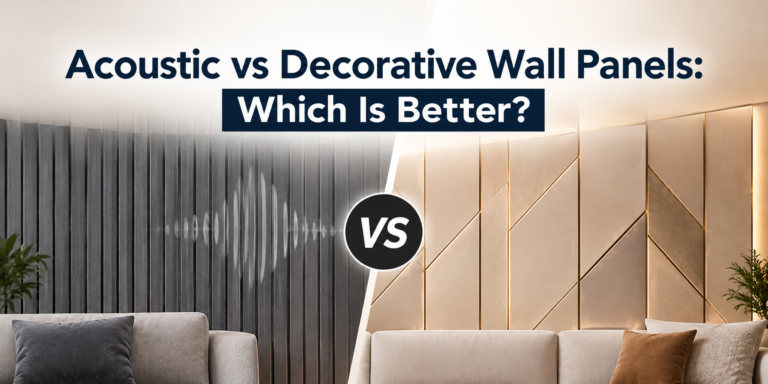
Choosing the right wall treatment can completely change the look, comfort, and functionality of an interior. If you’re searching for the best wall panels in Dubai, it’s important to understand how different panel types serve different purposes. When comparing Acoustic vs Decorative Wall Panels, acoustic options focus mainly on controlling sound, while decorative panels are designed to enhance visual appeal, texture, and character. The right choice ultimately depends on your room’s purpose, interior style, acoustic requirements, maintenance needs, and budget.
What are Acoustic Wall Panels?
Acoustic wall panels are designed to absorb sound reflections and reduce excessive echo and reverberation inside a room. They are particularly useful in spaces with hard surfaces such as tile, glass, concrete, and large uncovered walls, where sound can bounce around easily.
These sound absorbing wall panels can make conversations clearer and rooms more comfortable by controlling unwanted reflections. They are especially useful for:
- Home offices
- Home cinemas and media rooms
- Music and recording rooms
- Open-plan living spaces
- Meeting rooms
- Restaurants and hospitality areas
One important distinction is that acoustic treatment is not the same as complete soundproofing. Wall panels for noise reduction primarily help manage sound inside a room. Blocking noise from travelling between rooms usually requires a more comprehensive wall construction involving mass, sealing, and insulation.
What are Decorative Wall Panels?
Decorative wall panels are primarily installed to improve the appearance of an interior. They can transform a plain wall into an attractive focal point while adding depth, texture, warmth, or architectural character.
Available in different materials, patterns, colours, and finishes, decorative panels can complement almost any interior style. They are commonly used in living rooms, bedrooms, hallways, dining areas, reception spaces, and TV walls.
For homeowners looking for decorative wall panels for homes, the possibilities include fluted, slatted, textured, 3D, wood-look, and other contemporary finishes. These designs can create everything from a subtle modern backdrop to an impressive statement wall.
Acoustic vs Decorative Wall Panels: Key Difference
The biggest difference between the two is their primary purpose.
| Feature | Acoustic Wall Panels | Decorative Wall Panels |
|---|---|---|
| Main purpose | Sound absorption | Visual enhancement |
| Reduces echo | Yes | Usually limited |
| Improves room acoustics | Yes | Not their primary function |
| Adds texture | Yes, depending on design | Yes |
| Creates feature walls | Yes | Excellent |
| Design flexibility | High | Very high |
| Best for | Noisy or echo-prone spaces | Stylish interior upgrades |
Acoustic panels generally contain or incorporate sound-absorbing materials that help reduce reflections. Decorative panels, meanwhile, are selected mainly for their appearance. A textured or fluted surface may change how sound behaves slightly, but it should not automatically be considered an acoustic treatment.
Which Panels are Better for Homes?
For most homeowners, the answer depends on the room.
If you want to transform a blank living room wall, bedroom, TV wall, or dining area, decorative wall panels are often the more suitable choice. They can create a sophisticated finish while complementing other interior elements.
For example, feature wall panels behind a television or bed can instantly become the focal point of a room. Fluted, wood-effect, marble-look, geometric, and textured wall panels can add visual depth without making the space feel overcrowded.
If the room suffers from noticeable echo or you need better sound control, acoustic panels may provide greater functional value.
For homeowners who want both benefits, hybrid solutions can be considered. These combine decorative finishes with sound-absorbing materials to create stylish wall panels that contribute to a more comfortable acoustic environment.
When are Decorative Wall Panels a Better Choice?
If your primary goal is to refresh your interior design, decorative wall panels may be the better option.
They can instantly give a plain wall more personality without requiring a complete renovation. For example, a fluted panel behind a TV can create a sophisticated focal point, while textured wall panels can add dimension to an otherwise simple bedroom.
Decorative panels are also useful when you want to:
- Create an accent or feature wall
- Add visual depth to a room
- Introduce wood-inspired textures
- Enhance a TV or media wall
- Cover an outdated-looking wall
- Create a contemporary interior finish
- Complement existing furniture and décor
For luxury interiors, luxury wall panels can introduce a premium architectural appearance through sophisticated textures, wood effects, geometric details, and statement finishes.
Which Option Offers Better Style?
When it comes to design flexibility, decorative panels generally have the advantage.
Modern interiors can incorporate everything from subtle wood tones and fluted textures to bold geometric patterns and premium finishes. Luxury wall panels can create an upscale appearance, while simpler interior wall panels can provide a clean and contemporary finish.
The key is to select a design that complements the room rather than choosing a panel simply because it looks attractive on its own.
For budget-conscious homeowners, choosing affordable wall decor in Dubai can also provide a practical way to refresh a space without undertaking a complete renovation.
How to Choose the Right Wall Panels for Your Home
Start by identifying the main problem you want to solve.
If the room feels echoey:
Consider acoustic wall panels or decorative acoustic solutions designed for sound absorption.
If the room looks plain:
Choose decorative wall panels with a texture, pattern, or finish that complements your interior.
If you want both:
Look for decorative acoustic panels that combine sound absorption with an attractive finish.
If you want a statement wall:
Modern feature wall panels, fluted designs, geometric patterns, and textured finishes can create a strong focal point.
If budget matters:
Compare materials, coverage, installation requirements, and the amount of wall treatment you actually need rather than covering every wall automatically.
Conclusion
here is no universal winner in the Acoustic vs Decorative Wall Panels debate because each serves a different purpose. Acoustic wall panels are the better choice when reducing echo and improving sound quality is essential. Decorative wall panels are better when your priority is creating an attractive, modern, and distinctive interior.
For many residential projects, the ideal approach may be a combination of both. You can use decorative panels to establish a strong visual identity while incorporating acoustic solutions where sound control matters most.
At Rare Home Decor, the right wall treatment should balance design, functionality, durability, and the character of your space. Whether you want sophisticated decorative wall panels, practical acoustic solutions, or modern feature walls, selecting the right material and design can turn an ordinary wall into an important part of your interior.